Heritage & Artifacts
WWII Research Enterprises Limited (REL) Binoculars
Origin: Toronto, Canada | Era: World War II (1940–1946)
The Wartime Enterprise
Manufactured by Research Enterprises Limited (REL), a short-lived Toronto-based Crown Corporation established in late 1940 (active from late 1941) that specialized in building vital electronics and optical instruments during World War II.
Scale & Production
Despite existing for only six years, REL became Leaside’s largest employer during the conflict. The facility produced an astonishing C$220 million worth of radar systems and optical instruments (equivalent to approximately $3,843 million in 2025).
Post-War Legacy & Evolution
Following the war, the Canadian government rapidly closed its wartime manufacturing operations. However, REL’s legacy lived on: its former factories formed the industrial foundation for major global entities, including Corning Glass and Philips Electronics.
Today
Only a few of the original REL factory buildings still stand, now repurposed for light industrial and small commercial enterprises—making surviving instruments like this rare tangible pieces of industrial history.
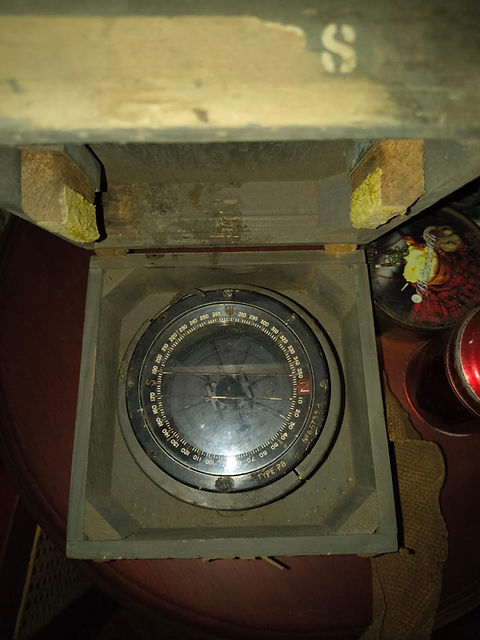
RAF Type P8 Navigational Compass (Ref 6A/0726)
Origin: United Kingdom (Royal Air Force) | Era: World War II (1937–1940s)
Historical Significance
Introduced around 1937, the RAF Type P8 was a standard grid-steering navigational instrument used in iconic British World War II aircraft, including the Supermarine Spitfire and Hawker Hurricane. It served as a vital cockpit tool during the Battle of Britain before eventually being succeeded by the P11 compass model.
Design & Specifications
Built as a grid-type steering compass featuring a magnetic needle and a card showing cardinal points. At its widest part, the instrument measures approximately 138mm (5.5 inches) in diameter.
Key Features & Controls
Features an official brass Air Ministry plate stamped with the reference number 6A/0726.
Markings & Authentication
Only a few of the original REL factory buildings still stand, now repurposed for light industrial and small commercial enterprises—making surviving instruments like this rare tangible pieces of industrial history.


Leica DRP 35mm Rangefinder Camera (Nr. 604179)
Origin: Wetzlar, Germany | Era: Vintage Classic
Overview & Craftsmanship
Manufactured by Ernst Leitz Wetzlar, the Leica DRP (Deutsches Reichspatent) is an iconic piece of photographic history. This particular unit, bearing serial number 604179, represents the pinnacle of mid-20th-century German engineering, precision optics, and timeless mechanical design.
Optical System
Equipped with a classic Leitz Elmar lens, renowned for its exceptional sharpness, natural contrast, and compact geometry that revolutionized 35mm reportage and travel photography.
Heritage & Legacy
More than just a camera, this instrument embodies the golden age of rangefinder photography capturing an era when precision mechanics and artistic vision merged seamlessly. It stands as a prized centerpiece within the Rock Cliff collection.
Leica M3 35mm Rangefinder Camera
Origin: Wetzlar, Germany | Era: Introduced 1954–1967
A Revolutionary Departure
Introduced in 1954 by Ernst Leitz GmbH (now Leica Camera AG), the Leica M3 marked a monumental shift for the brand. Until then, Leitz had produced screw-mount cameras that were incremental improvements on the original Ur-Leica. The M3 established an entirely new benchmark for precision photography.
Engineering Innovations
This iconic model introduced several groundbreaking features to the Leica lineage: a combined viewfinder and rangefinder in a single bright window (reminiscent of the Contax II), a sturdy bayonet lens mount, and a rapid film advance lever.
Legacy & Commercial Success
The M3 became the undisputed flagship and the most successful model of the legendary M-series, with over 220,000 units sold by the time production concluded in 1967.


Ampro Precision 16mm Film Projector
Origin: Chicago, United States | Era: 1930s
Cinematic Heritage
A stunning vintage collectible from the 1930s, this portable cinema machine was manufactured by the Ampro Corporation in Chicago, a pioneer in early motion picture equipment.
The Golden Age of Projection
Designed to bring motion picture screening beyond commercial theaters, this heavy-duty mechanical projector represents the ingenuity of early 20th-century home and educational cinema technology; making it a captivating conversation piece within the Rock Cliff exhibition.
1950s Tube Vulcanizing Machine ("Hot Patch" Press)
Origin: Industrial Heritage | Era: 1950s
The Thermal Press
An electric thermal press utilizing heavy heated metal plates (operating between 145°C to 165°C) paired with a precise mechanical screw clamp'''
Function & Purpose
Designed to chemically and thermally bond raw cushion gum rubber and hot patches, permanently repairing punctured or torn vehicle inner tubes during the mid-20th-century automotive era.


1930s Vauxhall Child’s Pedal Car
Origin:Britain (Lines Brothers / Tri-ang) | Era: 1930s
Master Craftsmanship
Famously manufactured by Lines Brothers Ltd. under their iconic Tri-ang brand in Britain.
Automotive Detail
These luxury-style toy motorcars meticulously mirrored full-sized automobiles of the 1930s, featuring distinctive bonnet flutes, pressed-steel bodies, opening side doors, and operational headlights.
Vintage 1930s Bakelite Telephone with Operator Switch
British GPO / International Style | Era: 1930s
The Material & Era
Crafted from heavy thermosetting phenol-formaldehyde resin (Bakelite), featuring a smooth, glossy black shell typical of classic mid-century design.
Mechanics & Switchboards
Equipped with an integrated operator switch (such as a recall switch or line-break key) and manual switch hooks designed to signal human switchboard operators during the era of party and manual lines.


Canon FT QL 35mm SLR Camera
Origin: Tokyo, Japan | Era: Introduced March 1966
Overview & Heritage
The Canon FT QL is a classic 35mm single-lens reflex camera introduced by Canon Inc. in March 1966. Renowned for its solid mechanical engineering and innovative "Quick Loading" (QL) system, it remains a cherished piece of vintage photographic history.
Lens Mount & Compatibility
Equipped with a Canon FL lens mount, it is natively compatible with Canon's extensive range of FL-series lenses. The camera can also operate later FD-series lenses in stop-down mode. Note: While older R-series lenses share a similar bayonet fitting, their differing aperture mechanism prevents them from being used.
Kit Lenses & Options
Original configurations were offered with high-performance standard kit lenses—including the 50mm f/1.8, 50mm f/1.4, and the fast 58mm f/1.2—with a body-only purchasing option introduced later.
Vintage Philips Tube & Transistor Radio ("Novosonic")
Origin:Europe / Philips Heritage | Era: Mid-20th Century
Valve-Circuit Sound
Classic entertainment units renowned for their warm acoustic output and traditional vacuum-tube engineering.
Design & Bands
Crafted with rich wooden and Bakelite or plastic trim, featuring AM, Medium Wave (MW), and Short Wave (SW) bands, illuminated dial scaling, and tactile analog tuning knobs.

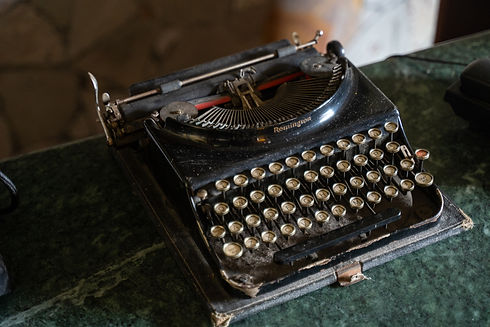
Vintage 1923 Remington Typewriter
Origin:United States | Era: Circa 1923
Mechanical Heritage
Representing the golden age of mechanical writing—often embodying the early-generation Remington Portable No.1 (Model A) or robust desktop standard models.
Collector's Value
Treasured for its exposed metal mechanics, intricate key segments, and tactile typing feedback, serving as a cornerstone of early 20th-century office history.
1960s Children’s Stamped Steel Pedal Jeep
Origin: United States (AMF / Garton Style) | Era: 1960s
Rugged Build
Constructed from heavy-gauge stamped steel, meticulously modeled after classic military and civilian utility jeeps.
Authentic Details
Features operational steering wheels, a windshield frame, small-scale rear spare tires, and robust mechanical pedal drives from legendary toy makers like AMF and Garton.


Original HMV (His Master’s Voice) Wind-Up Gramophone
Origin: United Kingdom / India | Era: Vintage Mechanical Era
Acoustic Engineering
A fully mechanical, spring-driven vintage phonograph designed to play 78 RPM shellac records using steel needles entirely without electricity.
Legacy
Bearing the iconic "His Master's Voice" Nipper trademark, these units represent the pinnacle of early acoustic sound reproduction, spanning portable cabinet models to external horn variants.
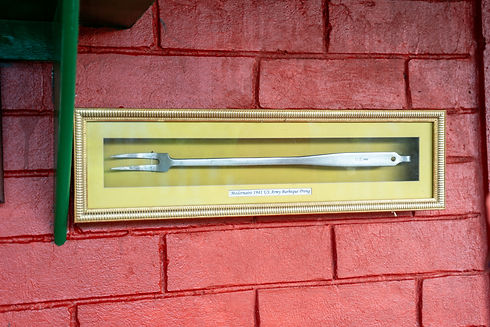
1941-Style Heritage Two-Prong Meat Carving Fork
Origin: Culinary Heritage | Era: 1940s Design Aesthetic
Form & Function
Features a streamlined stainless steel construction paired with a classic ergonomic handle.
Culinary Utility
Engineered with two sharp, robust tines to secure large roasts, poultry, or holiday ham firmly in place on the carving board for clean slicing and serving.

HMV Calypso Vintage Portable Record Player
Origin: India / British Gramophone Co. Heritage | Era: 1960s–1970s
Accessible Audio
Introduced by HMV (His Master’s Voice) during the 1960s and 1970s as a sleek, user-friendly, and portable turntable solution.
Cultural Legacy
Played a pivotal role in making vinyl music widely accessible across Indian households, enduring today as a cherished nostalgic collector's item.
U.S. Military Water Jerrycan
Origin: United States / Allied Forces | Era: World War II (1939–1945)
Design Evolution
During World War II, the U.S. military adopted the brilliant 5-gallon (20-liter) "jerrycan" design, which was reverse-engineered from captured German Wehrmacht-Einheitskanister units.
Safety & Identification
To strictly distinguish water cans from fuel containers in the field, U.S. water cans were painted in distinctive colors, clearly marked, and lined internally with safe materials to ensure drinking water remained uncontaminated.


U.S. Army M-1910 Canteen
Origin: United States | Era: World War II Era (Standard Field Gear)
Build & Capacity
Officially designated as the M-1910 canteen, this standard-issue field gear was typically constructed from durable stamped aluminum or enameled steel, holding precisely 1 quart (0.95 liters) of water.
Field Pairing
Every canteen came paired with a rugged khaki or olive-drab canvas cover and a matching metal cup designed to nest neatly underneath.
Caltex Vintage "Flimsies" Petrol Cans
Origin: Caltex Petroleum Heritage | Era: Early-to-Mid 20th Century
The "Flimsy" Tin
Thin, square metal petrol and kerosene cans issued during the early-to-mid 20th century.
Petroliana Collectibility
Today, these weathered tins are rare petroliana memorabilia items highly prized by automotive enthusiasts alongside classic road maps and vintage pump gloves to celebrate early motoring history.


BOYCO WWII Industrial Jerrycan
Origin: United States (Boyd Corporation / Boyle Manufacturing Co.) | Era: World War II
Industrial Wartime Contribution
BOYCO was one of the key American industrial manufacturers contracted by the Allied war effort to produce heavy-duty 5-gallon (20-liter) metal fuel and water containers—universally known as jerrycans—for the U.S. Military.
Burmah Oil Company (B.O.C.) Vintage Tin Cans
Origin:British / Asian Petroleum Distribution | Era: 1910s–1960s
Embossed Heritage
Vintage tin cans from the Burmah Oil Company (frequently stamped with the classic “B.O.C.” mark) were manufactured across several decades from the 1910s through the 1960s.
Products & Value
Featuring embossed or printed labels for products like Motor Spirit, Burmoline grease, or Victoria kerosene, these tins stand as cherished petroliana collectibles.


U.S. Army M-1943 Folding Entrenching Tool
Origin: United States Armed Forces | Era: Introduced Late 1943
Mechanical Design
Featuring a folding steel blade that locked securely into either a straight shovel or a 90-degree hoe/pick position via a specialized sliding locking nut.
Legacy
This versatile implement successfully replaced the fixed WWI-era M1910 T-handled shovel, giving WWII G.Is a compact, multi-purpose tool essential for digging foxholes under combat conditions.
SVOC Vintage "Flimsies" Petrol Can
Origin: Standard-Vacuum Oil Company (SVOC) | Era: 1930s–WWII
Field Challenges
Issued as 4-gallon thin-plate metal fuel containers during the 1930s and World War II.
The Nickname
Affectionately and critically nicknamed "flimsies" due to their weak crimped seams and thin metal sheets, these cans frequently leaked in harsh field conditions before being phased out in favor of sturdy jerrycans.


1960s Philips Radiogram Console
Origin: Europe / Philips Heritage | Era: 1960s (Mid-Century Modern)
The Entertainment Center
A classic floor-standing luxury entertainment console combining a multi-band vacuum tube (valve) or hybrid radio receiver with an integrated vinyl record player.
Aesthetic Legacy
Housed in beautifully polished mid-century wood cabinetry, these units served as the grand centerpiece of upscale living rooms during the golden age of analog home entertainment.
WWII Military Jeep "Combat Rims
Origin: Kelsey Hayes Wheel Company, USA | Era: Circa 1941 onward
Two-Piece Bolt-Together Design
Specialized wheels utilized primarily on iconic military light utility vehicles like the Willys MB and Ford GPW.
Field Utility
Engineered so soldiers could easily change or repair inner tubes directly in the field using basic hand tools, eliminating the need for heavy, power-driven tire-changing machinery.
